SiSyPHuS Win10 is a project of the German Federal Office for Information Security (BSI).
Based on an analysis of the security-critical functions in the operating system Microsoft Windows 10, recommendations for action to harden it were developed. These recommendations are now also part of the Greenbone Security Feed in the form of a compliance guideline and Greenbone customers can conveniently check them directly with the Greenbone appliances.

The measures include configuration recommendations, password policies, encryption requirements and, of course, updates. They help to make Windows 10 systems significantly more secure. By integrating the compliance policy into the Greenbone Security Feed, the measures can be easily integrated into the Greenbone Vulnerability Management audit routines.

More information can be found here.

We are pleased to inform you that the latest version of our operating system Greenbone OS is now available! We have taken many of your wishes into account: the focus of the improvement was the scanning of large networks with many scan results and extensive reports. Among other things, GOS 21.04 offers new hardware, an improvement of host detection and clearer reports.


Delivering the best vulnerability management to our customers – this goal has always been at the core of our products. With the new release of our operating system Greenbone OS, we stay true to this claim and make our products more powerful: especially for large networks with many distributed branch offices, scanning with GOS 21.04 is faster and the scan results are even clearer.

More powerful and faster hardware for the Midrange Class

In large networks, several distributed medium-sized to large appliances are usually used, linked together via a master-sensor setup. For this reason, the Midrange Class hardware appliances have been strengthened by improving their hardware.

Our new hardware now uses SSD-type hard disks instead of HDD, which are 10 times faster, quieter and lighter. There is also more storage space available. The RAM has also been improved: instead of DDR3, it is now DDR4, which is much faster due to a higher clock rate (3200 MHz). Furthermore, twice to four times as much working memory is available than before. In addition, the hardware received new, faster CPU of the latest generation and also the ports of the appliances were updated: instead of 6 ports GbE-Base-TX and 2 ports 1 GbE SFP there are now 8 ports GbE-Base-TX and 2 ports 10 GbE SFP+.

Boreas Alive Scanner for faster availability of results now as standard

Scanning is also getting faster – which is especially helpful in large networks. GOS 20.08 already introduced the Boreas Alive Scanner, a host alive scanner that identifies the active hosts in a target network. With GOS 21.04, the Boreas Alive Scanner becomes standard, eliminating the need for manual activation.

The Boreas Alive Scanner is not limited in terms of the maximum number of simultaneous alive scans it can perform, making it faster than its predecessor Nmap. This significantly reduces the scanning time for large networks. Initial scan results are available faster, regardless of the percentage of reachable hosts in the network.

Clearer reports thanks to new report formats

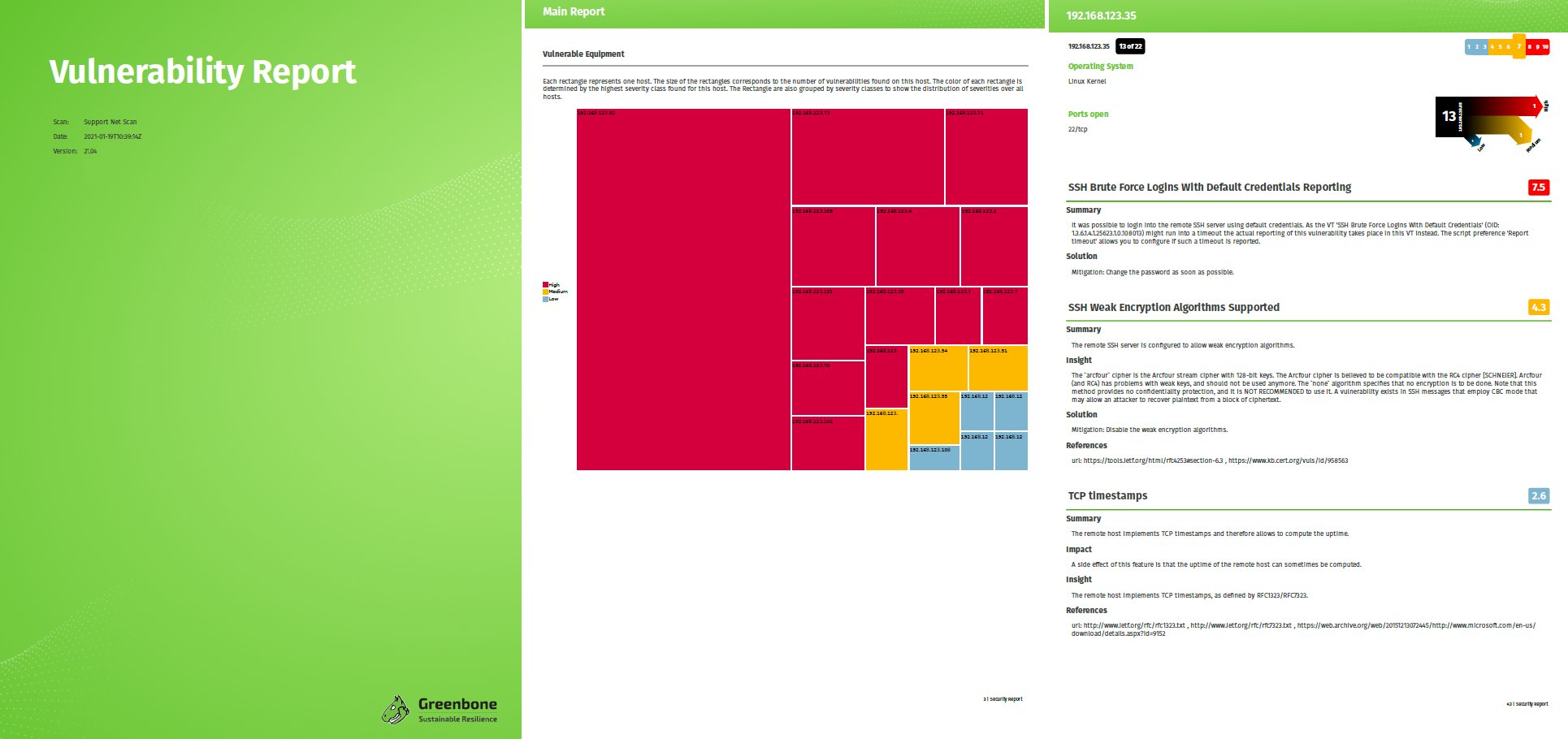
The evaluation of scans is also clearer – thanks to new report formats. With the Vulnerability Report format as PDF and as HTML, the reports are clearly structured and easy to read. Specific information relevant to the target group can be quickly identified and understood.

See for Yourself

Scanning with GOS 21.04 is even faster, more reliable and clearer. Convince yourself of our new features and changes! New appliances with GOS 21.04 are available now. For existing appliances, the upgrade to the latest version will be available next week. Also our free trial version will be usable with GOS 21.04 then.

Compliance Policies are used by companies, organizations, or authorities to check whether all products, applications, operating systems and other components used meet certain specifications. The Center for Internet Security (CIS) provides so-called CIS benchmarks for this purpose. Since March 2021, the Greenbone solutions also offer the possibility to check the fulfillment of CIS Benchmarks – with the help of new compliance policies.

But what do we actually mean by a compliance policy?

In addition to legal requirements, companies, organizations and authorities often have their own requirements that must be met for the secure configuration of a system. Such requirements can be formulated, for example, by a software or application vendor for its own products, but also by IT security organizations.

The aim is to ensure the information and data security of a company or an authority by guaranteeing the confidentiality, integrity, availability and authenticity of information.

All specifications and guidelines, but also recommendations to be fulfilled for this purpose, are bundled in a policy in written form.

These guidelines form the basis for compliance policies developed by Greenbone Networks, i.e., for the collection of tests that a Greenbone solution runs on a target system. A vulnerability test is developed for each individual requirement or recommendation to check compliance with that requirement or recommendation. All tests are combined to scan configurations by Greenbone Networks and added to the Greenbone Security Feed.

Since the scan configurations in this case map company or authority guidelines, they are referred to as “compliance policies”.


Example: A company issues a policy with the following requirements:

  • Version 2 of software A is installed on the target system
  • SSH is enabled on the target system
  • Software B is not installed on the target system

For each of the requirements, Greenbone Networks develops a vulnerability test that queries whether the respective condition is met.

The three tests are then combined into a compliance policy that a user of Greenbone solutions can select for running a vulnerability scan. During the scan, it is then checked whether the conditions listed above are met on the target system.


 CIS Benchmarks as decisive security guidelines

The Center for Internet Security (CIS) also publishes such security guidelines: the so-called CIS Benchmarks. CIS is a non-profit organization founded in 2000 to provide best practices for IT security that are used by governments, industry and academia.

One of the largest fields of activity of the organization is the so-called CIS Benchmarks. These are recommendations for handling and configuring numerous products from a wide range of product families. For example, there are CIS benchmarks for web browsers such as Mozilla Firefox or Google Chrome, for operating systems like Microsoft Windows or different Linux distributions, but also for the Microsoft Office products.

In contrast to many other security standards, which only make basic specifications regarding IT security – for example, that there must be vulnerability management – the CIS benchmarks are very detailed. They provide requirements that must be met in order to harden a system, i.e. make it more secure and protect it against attacks. Among other things, this can include criteria for passwords, but also the specification for a certain installed software version.

The CIS Benchmarks are provided by CIS free of charge as a PDF and are constantly being expanded. For CIS SecureSuite Members – just like Greenbone Networks is since 2021 – the CIS Benchmarks are also available via the CIS Workbench in other formats, for example for Microsoft Word or Excel.

CIS-certified Compliance Policies at Greenbone Networks

As with the security policies of other companies, organizations or authorities, Greenbone Networks has now developed own compliance policies based on the CIS benchmarks. These enable users of a Greenbone solution to check their networks, systems and applications against the requirements from the CIS benchmarks. Since March 2021, several compliance policies that map CIS benchmarks are included in the Greenbone Security Feed.

And the special thing about it: the compliance policies developed by Greenbone Networks are certified by CIS! This means that users can be sure that their system is tested according to the hardening recommendations of CIS.

Users can now check their systems to see whether the CIS requirements are met. This also simplifies the preparation of audits. Important criteria can already be checked in advance with a scan by a greenbone solution and any weaknesses found can be eliminated.

But these CIS certified compliance policies will not be the end of the story. Many more policies that map CIS Benchmarks are in the planning or even already in development at Greenbone Networks.

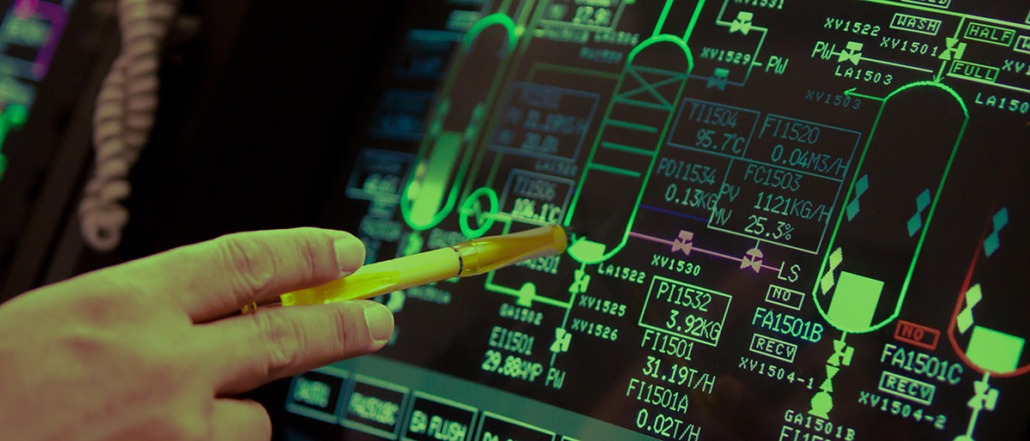
The water sector is one of the critical infrastructures (CRITIS). A successful attack on the sector can lead to significant hygiene and health problems and, in the worst case, threaten human lives. At the 6th VDI conference on “Optimizing Industrial Wastewater Treatment Plants”, Greenbone Networks will provide information on vulnerability management in the water sector and how the attack surface of IT infrastructures can be reduced by early detection and elimination of vulnerabilities.
Everything Fine Thanks to Digitization?

Digitization is seen as the savior of the hour. Even if this may be viewed critically at times, this development cannot be stopped. There are simply too many reasons in favor of digitization. But there are also many reasons that we need to take a critical look at, especially where our security is concerned. The more information technology we put in place, the more digitized attack surfaces we offer.
Malicious users of these attack surfaces can operate globally, and likewise digitized currencies like Bitcoin allow them to profit from vulnerabilities globally as well.

Unlike a bank robbery, an attack on an industrial wastewater facility is more of a a means to an end. The attacker does not want the contents of a safe, but rather targets the vulnerability as such in order to gain advantages, usually through blackmail. Not only technical systems themselves are attacked, but often also the technical and organizational environment from networks to administration. These attackers are not hackers with hoodies and matrix screen savers who just happen to have emergency on their account, but criminal organizations that are industrially and professionally organized. We must arm ourselves against them with resilient organizations, processes and solutions. This brings the topic of cyber resilience more and more to our attention.

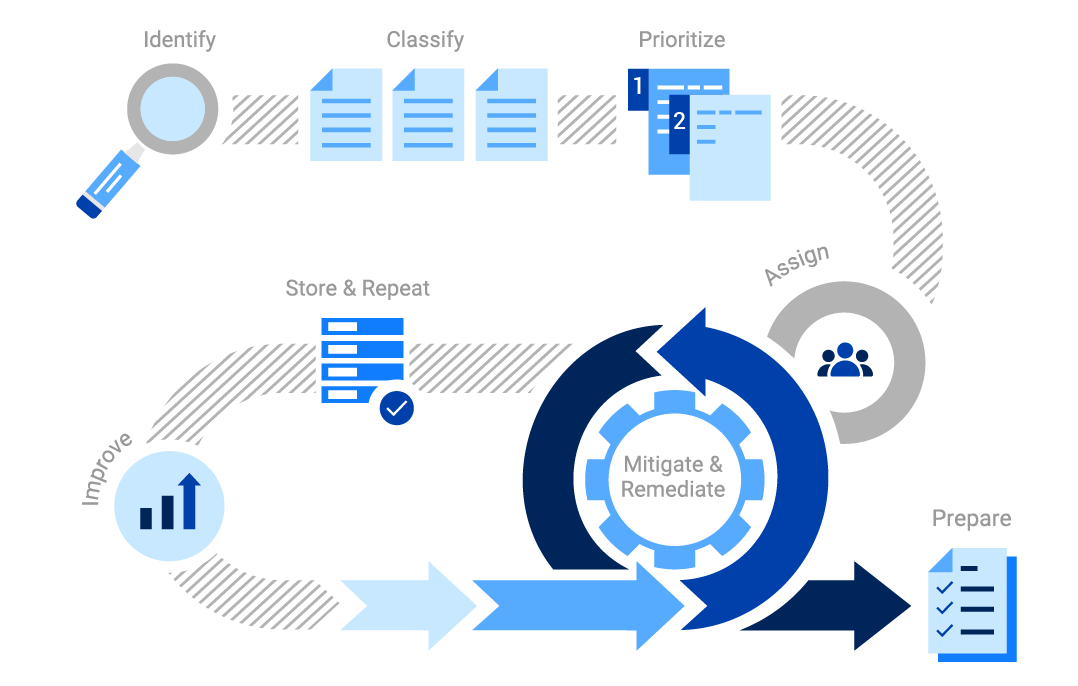
Cyber resilience is the ability of a company or organization to maintain its business processes despite adverse cyber circumstances. These can be cyber attacks, but also unintentional obstacles such as a failed software update or human error. Cyber resilience is a comprehensive concept that goes beyond IT security. It combines the areas of information security, business continuity, and organizational resilience. To achieve a state of cyber resilience, it is important to identify vulnerabilities early, prioritize them economically, and eliminate them.
Why Cyber Resilience Is Particularly Important for Critical Infrastructures

Sustainable cyber resilience is important for companies in all industries. But it is indispensable in the area of critical infrastructure (CRITIS). As defined by the German government, this includes “organizations or facilities of critical importance to the state community, the failure or impairment of which would result in sustained supply shortages, significant disruptions to public safety, or other dramatic consequences.”

CRITIS organizations must therefore protect themselves particularly well against cyber attacks – this is required by law. The EU launched the European Programme for Critical Infrastructure Protection (EPCIP) back in 2006 and expanded and supplemented it in subsequent years. Member states are implementing the EU NIS directive in national law, Germany for instance with the IT Security Act (IT-SIG). Large economic nations have already developed regulatory bodies. In the U.S., for example, this is the National Institute of Standards and Technology (NIST) and in Germany the Federal Office for Information Security (BSI).

In Germany, the critical infrastructures are divided into 9 sectors. One of these is the water sector with the divisions of public water supply and wastewater disposal. It includes, for example, waterworks, pumping stations, water pipelines and networks, wastewater treatment plants, the sewerage system, and dam and flood protection facilities. They all play a critical role in our society.

Attacks on the water supply could therefore hit a society to the core and, in the worst case, threaten human lives. Attacks on the wastewater disposal system are just as dangerous. If it no longer functions, the result would be considerable hygienic and health problems. Since the water infrastructure uses many IT systems and electronic control systems (ICS) nowadays, it becomes an attractive target for hackers.

Incidents Show the Vulnerability of the Water Sector

In recent years, there have been numerous attacks on water infrastructures worldwide. Fortunately, there have been no serious consequences so far. However, the attacks show that hackers are exploring how to take control of control systems and prepare further attacks. In 2013, for example, Iranian hackers attempted to penetrate the systems of the Bowman Avenue Dam near the town of Rye Brooke, near New York. The dam is used to control the flow of water after heavy rains and prevent flooding of the town. The hackers managed to gain control over the flood gates’ control system. However, as these were currently offline due to maintenance, the cyber criminals were fortunately unable to cause any damage.

In March 2016, security specialist Verizon reported a cyber attack on a U.S. water utility known by the pseudonym Kemuri Water Company in its monthly Security Breach Report. Hackers had penetrated the SCADA platform. This allowed them to manipulate programmable logic controllers. They changed settings on the water flow and the amount of chemicals added for water treatment. Fortunately, the water utility quickly discovered the incident and was able to correct the settings without causing any major damage. For their attack, the hackers exploited an unpatched vulnerability in the customer payment portal.

Between November 2016 and January 2017, cyber criminals hacked several wireless routers at a U.S. water agency. The routers were used to provide secure wireless access for pump station monitoring. Fortunately, however, the attackers were not looking to sabotage, but were targeting the agency’s Internet resources. Their bill rose from an average of $ 300 per month to a whopping $ 45,000 in December and $ 53,000 in January. For their attack, the hackers exploited a vulnerability in the routers of the manufacturer Sixnet. According to its own information, Sixnet had already made a patch available in May, but the authority had not installed it.

Over the past year, Israel has been the victim of multiple cyber attacks on water supply and treatment facilities. In April, hackers undertook a major cyber attack on control and monitoring systems at wastewater treatment plants, pumping stations and sewers, the Israeli National Cyber Directorate (INCD) said in a statement. The INCD then demanded companies in the water sector to change passwords for all systems connected to the Internet-connected systems and to ensure that control system software is up-to-date. The hackers attempted to change the chlorine content of water at a water treatment plant. The attack was not successful. Had it been, it could have resulted in mild intoxication of the population served by the treatment plant. Back in June, there were two more attacks on Israel’s water facilities. This time, agricultural water pumps were affected.

Although there has not yet been a comparable incident in Germany, the Federal Office for Information Security (BSI) reports about the implementation of the necessary organizational and technical precautions to prevent disruptions in its current report on the state of IT security in Germany. In the water sector, this reveals deficiencies in the areas of network separation, emergency management and physical security. In the reporting period from June 2019 to May 2020, there were several incidents in the water sector in Germany that were due to faults in control components. Remediation of the malfunctions was very lengthy and costly. Damage was avoided by operators acting prudently and having redundancies in place.

Attack Points in the Water Sector

IT and OT systems support the water cycle. In water production (1), quality control systems and digital pump control are used to manage water inflow from various sources towards water distribution (2). Digital metering and control methods monitor water pressure and quality in the water network and are thus part of the overall IT attack surface. In sewage systems (3), wastewater pumps and pre-treatments by filters, which are monitored at central points, are used. Water treatment (4) is a critical component due to the necessary digitalized control of physical, chemical and biological processes.
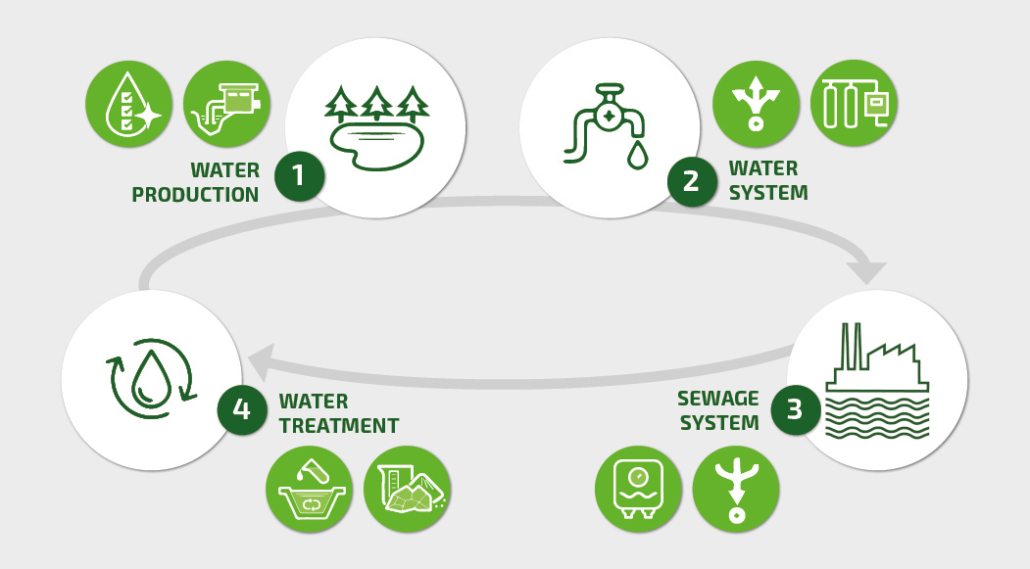
Many networked IT systems and industrial control systems are therefore used in drinking water supply and wastewater disposal, enabling largely automated processes. Examples include sensors for temperature, flow rate, or chlorine content, remotely readable meters, and web portals and mobile apps for customers.

Challenges for Cyber Resilience in the Water Sector

To reduce their attack surface for cyber criminals, water sector organizations must consider the full range of networked systems, devices and applications.

But this is not always easy. One problem is that the ICSs used in the water infrastructure come from different generations. Many of the older control systems were developed at a time when little or no consideration was given to cyber security. This leads to a heterogeneous, vulnerable IT landscape. Additionally, the high degree of automation and dependence on industrial controls makes water infrastructure particularly vulnerable to attack. Furthermore, the IT systems in use are becoming increasingly complex. This makes it difficult for companies to achieve a sufficient level of protection. The increasing networking of components within the field and control level as well as the control and process control technology increases the complexity even further.  At the same time, this increases the attack surface for hackers. They have more and more opportunities to penetrate networks, steal data or manipulate industrial controls.

Even Previously Unexploited Vulnerabilities Should Not Be Underestimated

A recent study by Kenna Security found that the total number of vulnerabilities discovered per year has increased from 4,100 in 2011 to 17,500 in 2021. On the other hand, the percentage of vulnerabilities exploited by hackers has not grown at the same rate. What is the reason for this?

Cyber crime follows the same economic rules as any other business model: least investment for maximum result. But cyber crime also suffers from the same problem as the IT industry in general: experts are a limited resource.

Companies cannot change this initial situation, but they can ensure that their attack surface is reduced. Tolerating a large attack surface, even if the vulnerabilities are not yet weaponized, is replacing control with gambling. As soon as it seems cheaper for cyber criminals or the outcome is promising, cyber crime will focus on vulnerabilities that are not yet weaponized, and the conversion of vulnerabilities into weapons will happen quickly.

Even worse is the motivation of cyber terrorists, who have so far been fortunately unsuccessful due to a lack of expertise. It is unclear whether they will gain the necessary skills and if so, when. But they do not follow the rules of economics, which makes them less predictable in selecting targets and suitable weaponized vulnerabilities.

In essence, there are two good general reasons why organizations should establish a process to manage and minimize their entire attack surface and not just focus on current (or likely) weaponizable vulnerabilities:

  • Pandemic risk: while it may not be attractive for a single criminal organization to invest in turning a more expensive vulnerability into a weapon, the more organizations choose not to do anything about that vulnerability, the more interesting it becomes. The fewer that are vaccinated, the better the pandemic spreads.
  • Automation risk: automating exploits is not only an attractive, cost-effective way to go. It significantly reduces the window of opportunity to respond with countermeasures.

Reduced Attack Surface with Vulnerability Management

Regardless of how many vulnerabilities exist, managing damage and actively countering ongoing attacks becomes exponentially expensive for organizations if not accompanied by an ongoing process that identifies, manages and reduces the attack surface.

Cyber resilience is a continuous process. It strengthens an organization’s ability to withstand an attack and enables it to continue to function during an attack. To achieve this, it is important to reduce the attack surface and thus stabilize the base. This means identifying vulnerabilities that could be exploited by an attacker and thus staying one step ahead of the attacker.

999 out of 1,000 vulnerabilities have been known for over a year. With vulnerability management, this means that these vulnerabilities can be identified and eliminated before they are exploited by an attacker. This greatly reduces the attack surface of the IT infrastructure.

Vulnerability management systems are fully automated and, thanks to features such as schedules and custom scan configurations, offer users the ability to create complete vulnerability management processes that constantly scan for vulnerabilities. As a result, vulnerability management ensures more resilient systems in the long term.


It was one of the most spectacular cyber attacks of all time: hackers attacked SolarWinds in the fall of 2019 and injected malware into an update of SolarWinds’ Orion platform in the spring of 2020. Customers who installed the compromised version of the network management software got the “SUNBURST” backdoor right out of the box – including numerous U.S. government agencies and large corporations. Well camouflaged, the hackers were able to spy on data unnoticed for a long time. Here you can learn if you are affected by the SolarWinds attack and how you can protect yourself using Greenbone Networks’ solutions.

The cyber criminals have thus pulled off an almost perfect coup. There is an element of irony to the attack since SolarWinds’ customers use the Orion platform to monitor their IT environment for suspicious behavior. The hackers were hiding in plain sight, as it were, and proceeded in a very targeted and extremely sophisticated manner. They first attacked SolarWinds with the specially developed “SUNSPOT” malware. This injected the malicious “SUNBURST” backdoor, also called “Solorigate”, into the “SolarWinds Orion Platform” update product line. The malware was embedded directly into the code where it obtained valid software signatures, making it perfectly camouflaged. With the update compromised, the backdoor could then be distributed to customers undetected.

Undetected for a Long Time

On 12th December 2020, SolarWinds was informed about the incident and launched an investigation. Security firm FireEye, which itself had been infected with the malware, published additional information about the intrusion into its network. According to its research, the cyber criminals had stolen various attack tools from FireEye, which the company use for testing its own customers’ security. Other SolarWinds customers also reported security breaches. In addition, during the investigation of the incident, security researchers found another backdoor that had apparently originated from a second, independent hacker group. The attackers had exploited the previously unknown vulnerability CVE-2020-10148 in the Orion platform to install a malicious web shell called “SUPERNOVA” on targets running the Orion platform. More recently, multiple new vulnerabilities have also been discovered, vulnerabilities that could allow full remote code execution if left unpatched.

In the Greenbone Security Manager, the Appropriate Vulnerability Tests Are Already Integrated

Around 18,000 customers have received the compromised SolarWinds update, making them particularly vulnerable to an attack. However, not all of them have been hacked by cyber criminals through the back door and have tapped into data. The hackers have so far concentrated on particularly attractive, lucrative targets. Are your networks also at risk? As a Greenbone Networks customer, you can find out right away as we integrated corresponding vulnerability tests into the Greenbone Security Manager (GSM) as soon as the incident became known. Our vulnerability scanning will show you whether your IT environment is at risk via “SUNBURST”/”Solorigate” or CVE-2020-10148, making you one of the potential attack targets. In addition, the GSM can check whether you have already fallen victim to “SUPERNOVA”, or the additional malware tools used by the hackers “TEARDROP” or “Raindrop”.

The Situation Is Serious, but There Are Solutions out There

Anyone affected by the vulnerabilities mentioned above should work to close them immediately using the hotfixes and patches SolarWinds has published for them as the unknown hacker group is still active and at large. Only recently, the security firm Malwarebytes announced that it was the victim of a cyber attack. Obviously, the same actors are behind this as in the SolarWinds hack, although Malwarebytes itself does not use SolarWinds software at all. In this instance, the cyber criminals misused applications with privileged access to Office 365 and Azure environments as an attack vector. Fortunately, the damage was reported to be minor and Malwarebytes software was not compromised.

All these incidents have shown that we have reached a new dimension of cyber crime. Actors are carrying out perfectly planned, complex and multi-stage attacks, first hijacking trusted software to then gain access to other more lucrative victims. To ensure such attacks have as few chances as possible to succeed, it is important to identify and close vulnerabilities as soon as possible.

Are there actually independent reviews of Greenbone Networks solutions?
Of course – we are proud to present the latest report from a leading industry magazine: “IT-Administrator tried the system [solution from Greenbone Networks] and was thrilled with its functionality”. (IT Administrator 01/2021)

In September 2020, the magazine IT-Administrator – a German professional journal for system and network administration – asked Greenbone Networks if they could write a test report about a Greenbone appliance.

The report is currently published in the January issue of the magazine. Here you can read the detailed report.

In the test, IT-Administrator took a closer look at the GSM 150. The GSM 150 is a physical appliance designed for vulnerability management in small to medium-sized businesses, or organizations with medium-sized branch offices. It scans up to 500 IP addresses within 24 hours and can also be used as a sensor for larger appliances.

Everything that must be done in a standard deployment of a Greenbone Security Manager was tested: from the initial setup via the console, to configuring scans on the web interface, to evaluating a scan report.

For testing the vulnerability scans, IT-Administrator had prepared different target systems with different security status to examine the differences in the results. Authenticated scans were also part of the test.

Read the full article here (German only).